A rural market intersection in Amatala, South 24 Parganas. Late May, close to 3 PM. Scorching heat — the kind that empties streets in cities but does not slow down a functioning market. Autos, vendors, the particular density of a place that keeps its own rhythm regardless of weather. A brand sampling and trial-sales activation is underway.
An elderly man approaches the stall. Cap, striped shirt. He examines the product on display, then reaches into a small polythene bag and counts out coins to pay. Deliberately. Without hurry.
After paying, he does not leave. He reads the label. Both sides. Slowly.
When spoken to, what follows is not the response of a first-time buyer encountering something new. He knows the brand — specifically. He recalls a product he has used previously, compares it to what he is holding, and has a formed view on the claim being made. He is not processing new information. He is verifying it against what he already knows.
The coins were not loose change. They were stored separately — in the inner pocket of his shirt. A small system. A prepared consumer.
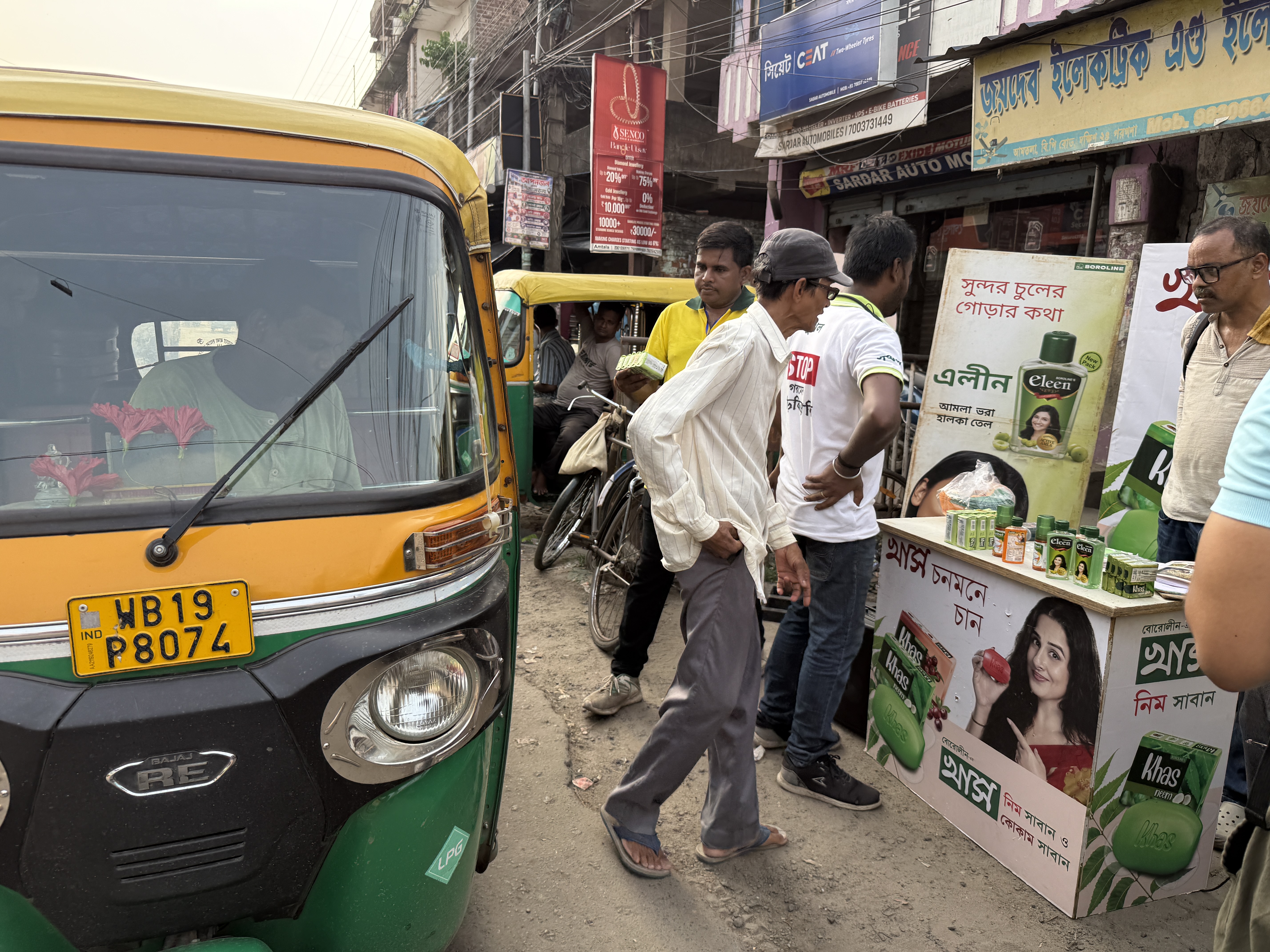
What the Coins Revealed
A consumer who separates his spending money before leaving home is a planned purchaser. He anticipated the category, estimated the spend, and came prepared. The polythene bag with its counted coins was not incidental — it was evidence of a system.
This distinction — between planned purchase intent and activation-created intent — shapes how a programme should be designed from brief to execution. When the intent already exists in the market, the activation's job is not to manufacture it. It is to meet it well — to give a consumer who is already ready a product communication he can verify and an experience that confirms his decision was sound.
"The activation did not create his intent. It gave his intent a place to land. That is a fundamentally different job for a campaign to do."
The polythene bag is not a signal of low aspiration. It is a signal of considered spending. Every rupee in it was earned deliberately. It will be spent the same way.
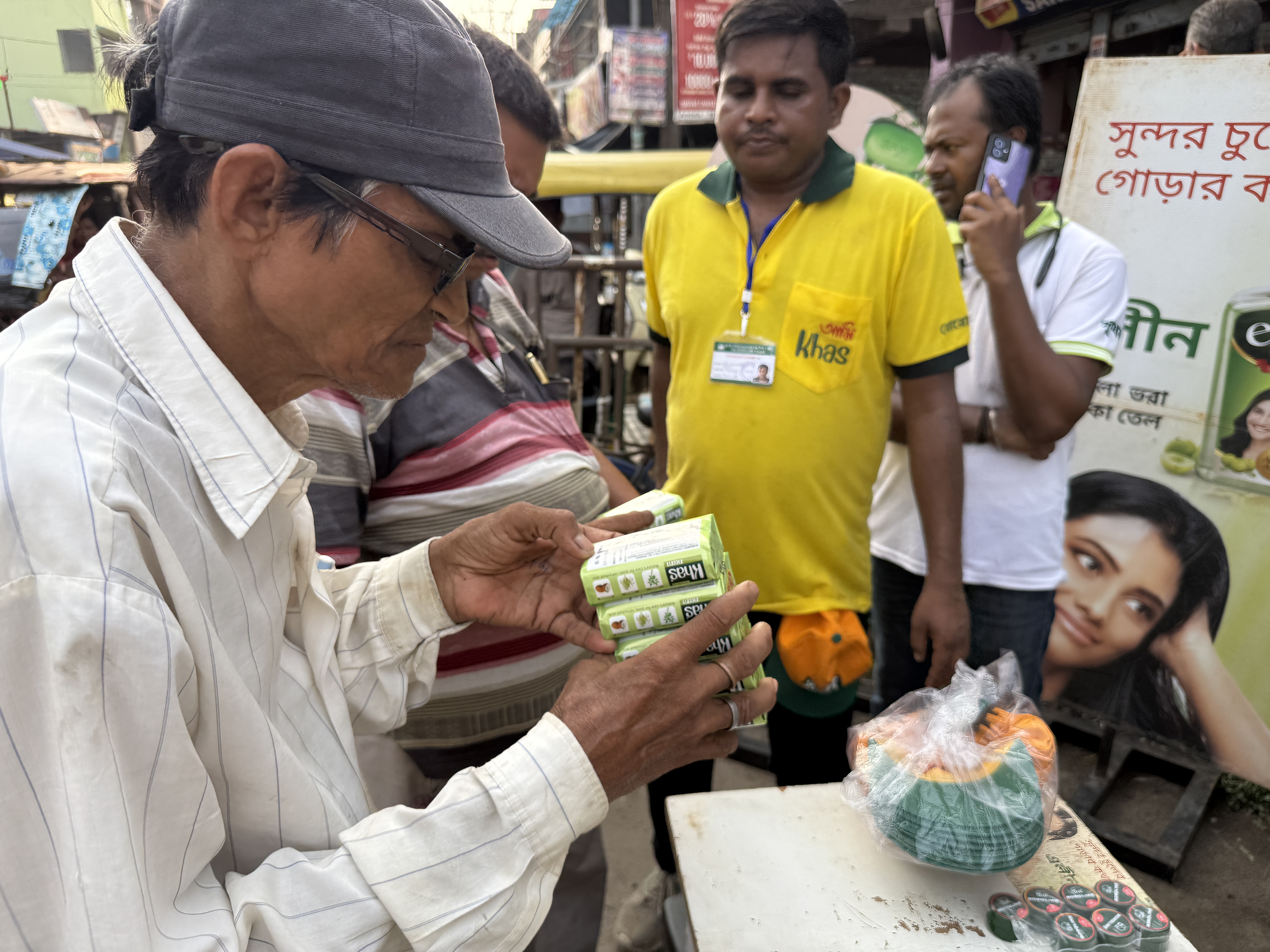
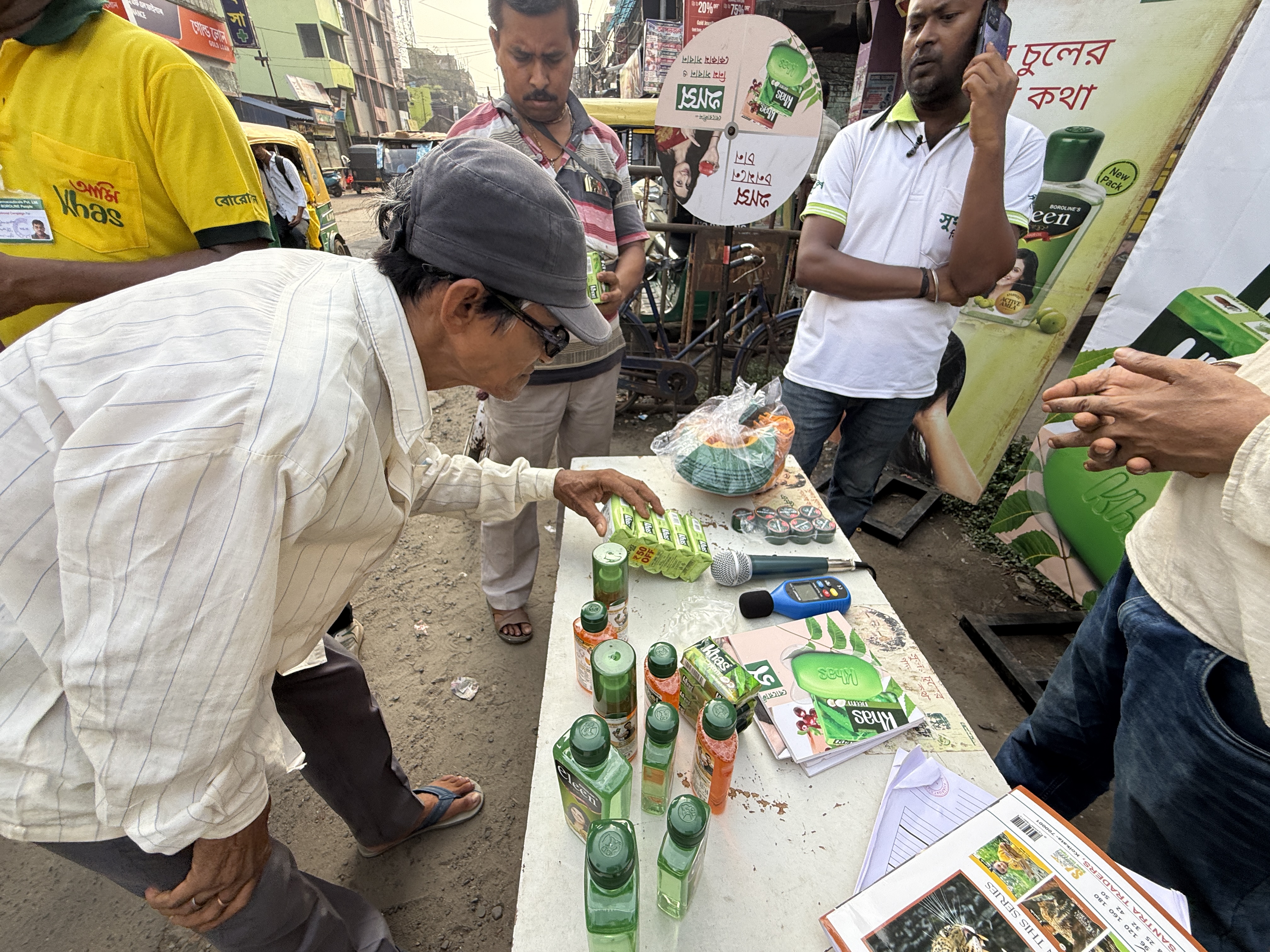
Brand Memory in Markets That Are Assumed to Be Unformed
The consumer at this stall had strong brand recall — not for the category in general, but for specific products, specific claims, specific past experiences. He could evaluate what he was holding against what he already knew. He had an opinion on the ingredient rationale. He engaged with the claim on the pack not as new information but as something to be verified.
This depth of consumer knowledge exists widely in rural and semi-urban markets across Eastern India — in categories that have had presence there for years. It is one of the most valuable and often underutilised assets available to a brand running activation in these geographies.
The implication for campaign design is direct: field communication — the pack, the demonstrator, the sampling conversation — must be built to engage a consumer who already knows things. Not to introduce, but to deepen. Not to convince, but to confirm.
Three Things Field Observation Sharpens in Activation Design
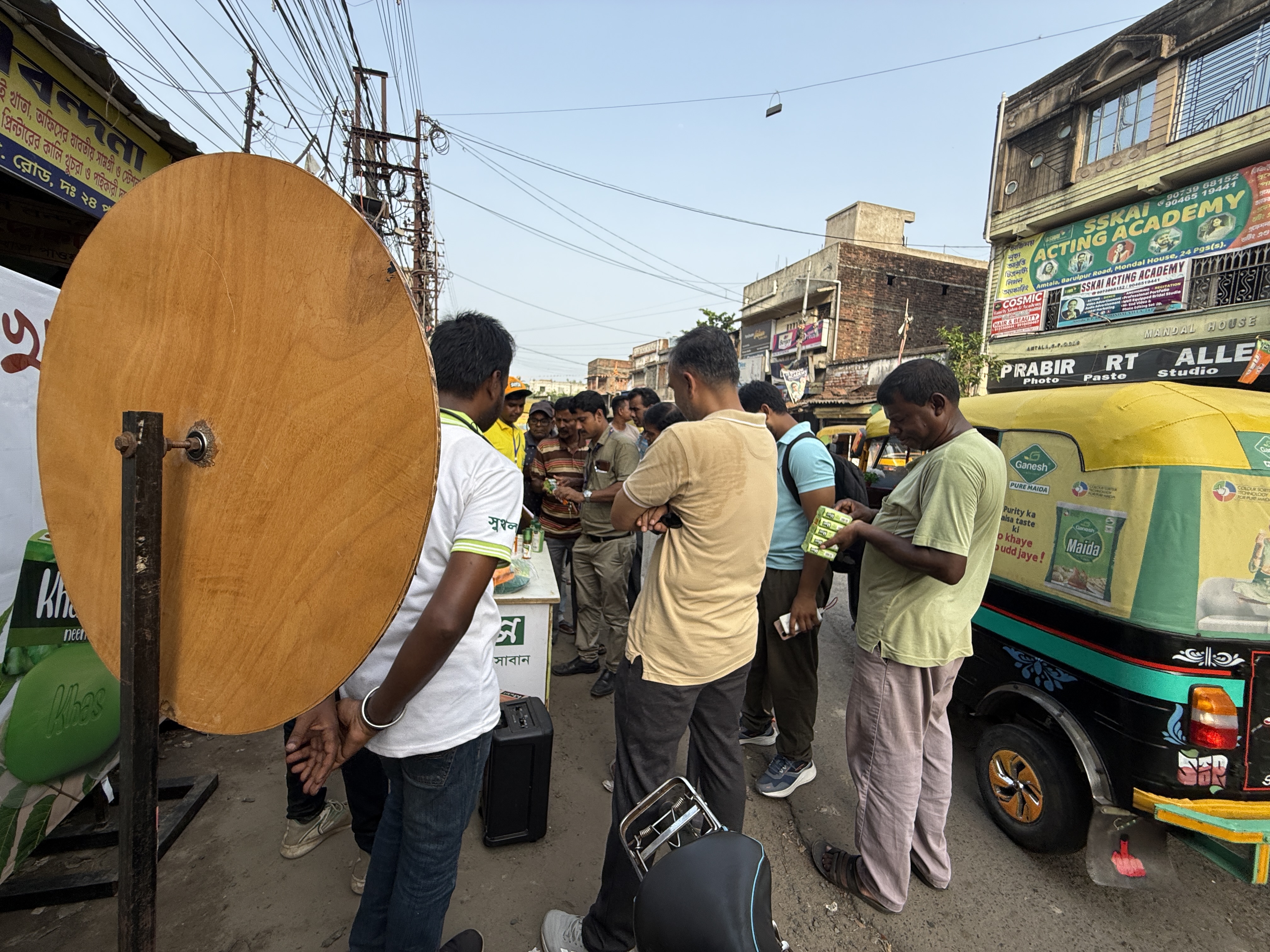
What Field Presence Makes Possible
This consumer will not appear in the activation report as anything other than one unit of trial. His knowledge, his evaluation process, his considered decision — none of it surfaces in a standard output metric.
Field visits exist precisely to recover this kind of intelligence. Not to supervise execution, but to observe the market as it actually behaves — the consumer who reads the label, the conversation the script did not anticipate, the detail that a report would never flag but that changes how the next brief is written.
The rural market in 2026 is active, layered, and moving. The consumer at that stall in South 24 Parganas was not waiting to be discovered. He had already arrived — coins counted, intent formed, ready to evaluate.
The question an activation programme must answer, before a single van leaves the depot, is simply this: when that consumer picks up the product and reads it — is everything ready for him?
As reported by Rajeev Singh, Founder & Managing Director, COMCRAFT Advertising & Marketing Pvt Ltd — from his field visit during the campaign in Amatala, South 24 Parganas, West Bengal.