Corporate trade marketing teams are among the most rigorous planners in the marketing function. They build outlet coverage models, set visibility norms, design scheme calendars, and track offtake with discipline. The frameworks are sound. The intent is right. And yet, every trade marketing manager who spends time in the market will tell you the same thing — there is a consistent gap between what the plan says and what actually happens at the outlet.
This piece is not about questioning trade strategy. It is about what field execution agencies observe when we work alongside trade teams to close that gap. Over two decades of working at the point of purchase across India — and ten years of building systems with trade marketing managers across categories — here is what we have come to understand about the last mile.
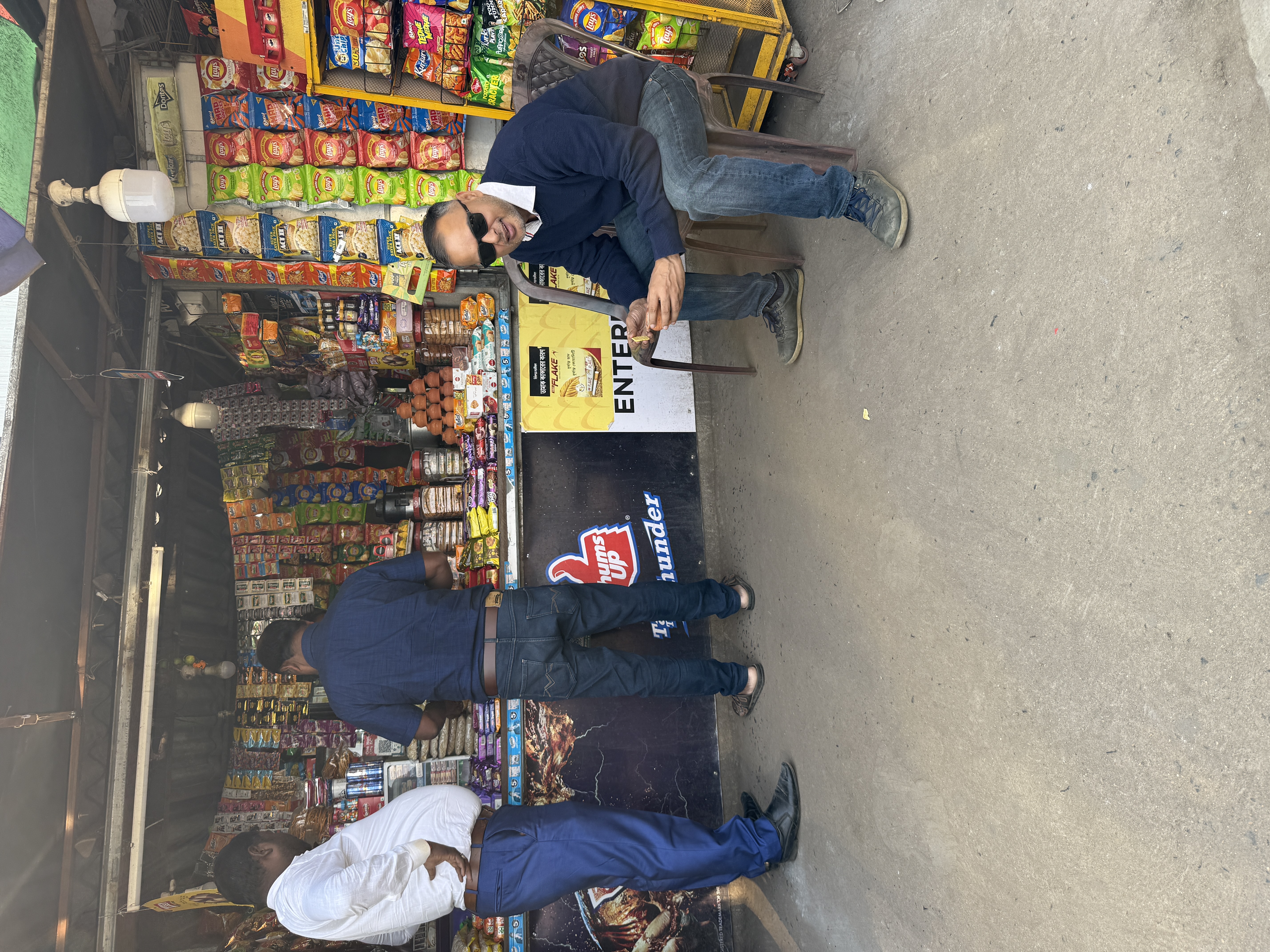
The Retailer Is Not a Passive Channel. He Is the Final Communicator.
The most important insight that decades of field work has reinforced is this: the retailer is not a passive endpoint in the distribution chain. He is an active, opinionated communicator who influences consumer decisions every single day — often more powerfully than any campaign running above the line.
In most Indian markets — particularly semi-urban and rural — consumers trust the outlet keeper the way they once trusted a family grocer. They ask him what is good. They ask him what others are buying. They act on his recommendation without question. When a consumer is undecided between two products at a similar price point, what the person behind the counter says in the next ten seconds determines the sale.
This is retailer psychology in its simplest form: the outlet keeper's recommendation is a consumer decision driver. Trade marketing that ignores this — that focuses only on scheme push and visibility compliance without building genuine retailer engagement — is leaving the most powerful lever on the table.
"Win the retailer at the last mile, and you win the consumer. Everything else is preparation for that moment."
Retailer Psychology: What Drives Recommendation Behaviour
Retailer recommendation behaviour is shaped by several factors that are distinct from scheme incentives. Understanding these is foundational to any effective last-mile programme.
Margin sensitivity is real but not the whole story. A retailer recommends what earns him margin, yes — but he also recommends what has fewer returns, what his regular customers come back satisfied having bought, and what makes his counter look credible. A product with frequent complaints or short shelf life gets quietly deprioritised regardless of the scheme structure.
Brand familiarity drives confidence at the counter. When the outlet keeper has seen field representatives, attended a retailer meet, or received consistent communication from the brand, he is more likely to speak confidently about the product to hesitating consumers. When he has had no contact with the brand for months, he will default to whatever is in front of him — usually the competitor who visited last week.
Consumer feedback loops shape retailer behaviour deeply. The outlet keeper hears from his customers after every purchase. He knows which products satisfy and which ones come back with complaints. This informal feedback loop makes him a powerful early warning system — and a powerful advocate when the experience is consistently positive.
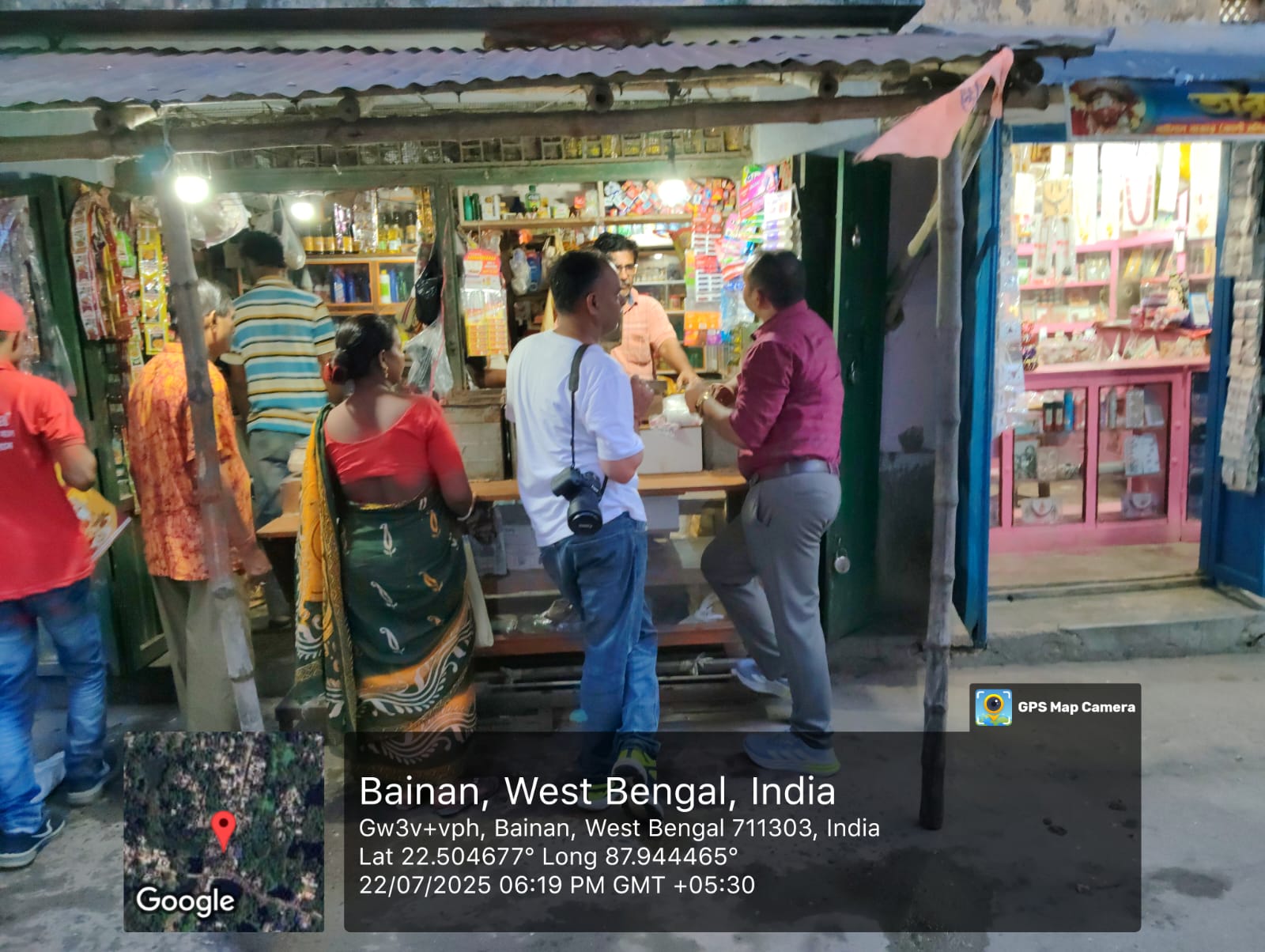
POS Merchandising: Visibility That Converts, Not Just Complies
Point-of-sale merchandising is one of the most studied areas in trade marketing, and yet execution gaps at the outlet level remain one of the most consistent findings in any retail audit. The reason is usually not budget or design — it is the gap between installation and sustained visibility.
POSM installed at the time of van delivery looks excellent in the compliance photograph. Three weeks later, in the absence of follow-up, it has often migrated — replaced by a competitor's material, moved to make space, or simply taken down because it was inconveniencing the outlet's own display preferences. Trade teams know this. The challenge is building execution systems that account for this reality rather than assume it away.
Effective POS merchandising in the Indian market works when it is designed with the outlet keeper's interests in mind, not just the brand's visibility requirements. Materials that make the outlet look well-organised, that help customers navigate the product range, or that serve a practical display function tend to stay up. Materials that serve only the brand's communication agenda in spaces the outlet keeper did not allocate tend not to.
In-Shop Activation: Converting Footfall Into Trial
In-shop activations — demonstrations, sampling, trial-driving interactions at the outlet — are among the most effective tools available to trade marketing programmes when deployed correctly. Their value lies in converting passive footfall into active engagement at the exact moment a consumer is in a buying environment.
The difference between in-shop activation and most above-the-line communication is immediacy. A consumer who sees a demonstration and tries a product in the outlet can act on that experience within seconds. There is no delay between interest and purchase. This makes in-shop activation particularly powerful for new product launches, for driving trial against entrenched competitors, and for categories where the purchase decision is heavily experiential.
The other benefit — often underweighted in planning — is the effect on the outlet keeper. When an in-shop activation is well-run, the retailer sees consumer interest generated directly at his counter. He sees trial happening. He sees questions being asked and answered. This builds his confidence in the product and, critically, his willingness to recommend it after the activation team has left.
Sales Seeding Programmes: Building the Base Before the Push
Sales seeding is one of the most underused levers in trade marketing, particularly for new products or for brands entering new geographies. The principle is straightforward: before investing in scheme push and mass distribution, seed selected outlets with product, build initial trial, generate authentic early adoption at the retail level, and use that momentum to create pull that makes broader distribution easier.
The logic behind seeding is partly economic and partly behavioural. Economically, it concentrates early investment in the outlets most likely to generate visible trial and recommendation. Behaviourally, it creates social proof at the outlet level — a retailer who has been stocking a product for a month and has seen initial consumer response is a fundamentally different advocate than one who has just received his first stock through the van.
- Identify high-influence outlets in the target geography — not necessarily highest volume, but highest recommendation credibility in their immediate catchment
- Place product with these outlets before mass van sales operations begin, with adequate communication and support
- Track initial consumer response through field visits and retailer conversations, not just offtake data
- Use early adopter retailer feedback to refine communication, pricing, and display approach before scaling
- Build a small group of retailers who are genuinely familiar with the product before the broader push — this seeded base becomes the foundation for recommendation spread
Seeding programmes require patience and close coordination between the trade team and the field execution partner. They do not show in offtake numbers for the first four to six weeks. But they build a quality of retail-level adoption that scheme-led distribution rarely achieves on its own.
"A retailer who chose to stock your product before the scheme was designed is worth ten who stocked it because the distributor pushed it."
What Field Execution Agencies Bring to Trade Teams
The best trade marketing outcomes we have been part of have always been collaborative — where the trade team's strategy and systems are complemented by a field partner's ground-level presence and outlet-level intelligence. These are not competing functions. They are sequential ones.
Trade teams build the plan, set the norms, design the scheme architecture, and manage the distributor network. Field execution agencies close the gap between the plan and the outlet — through feet on ground, real-time reporting, outlet keeper relationship management, and the kind of market intelligence that only comes from someone who was physically present in the store yesterday.
What we consistently contribute is not strategy — it is ground truth. The outlet visit that surfaces the competitor placement no one in the monthly review knew about. The retailer conversation that reveals why a particular SKU is moving slower than the data suggests. The activation that generates genuine consumer trial in a market where distribution has existed for six months but awareness has not.
The last mile is not a logistics problem. It is a communication and relationship problem. And it is where the gap between a brand's ambition and its actual market reality is most visible — and most closeable, when the right execution systems are in place.